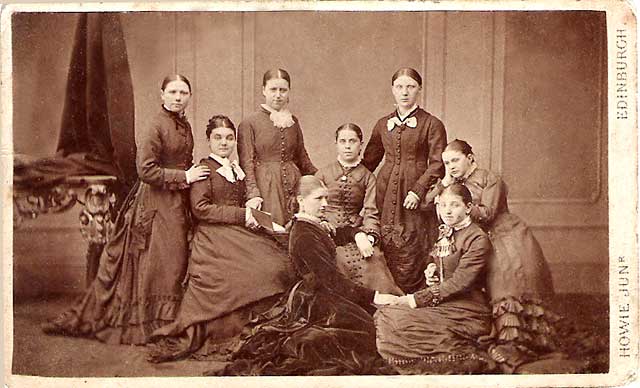
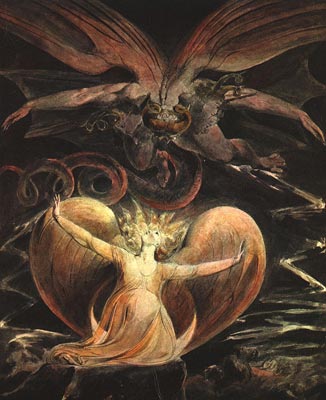
The above images are from the 19th century and mark the true beginning of photojournalism. However, these photos are very different from the journalism photos we see today. In the modern era, journalism photos tend to be rather busy and seem to attempt to capture a specific action at a precise moment. Modern photojournalists seek to snap the most exciting and intriguing moments of everyday life events. Contrary to the photos taken by photojournalists today, the above photos are very calm and even atmospheric. The photos are still intriguing, yet they only focus on one persona and they lack any exciting action. The photos from the 19th century also feel much more intimate, capturing these figures in very personal moments. Also, it seems like these days in photojournalism more emphasis is placed on the subject rather than on the composition, but in the 19th century photos it appears that composition still played a large role in the field of photojournalism.
Monday, February 15, 2010
Friday, February 12, 2010
"The Snowflake Man"

Snow Crystal- William A. Bentley, 1902
What William A. Bentley did for the worlds of both science and photography is really great. I can only imagine that Bentley's microscopic snowflake were the predecessors to macro photography as we know it today, as well as the precursor to the modern day microscope. Bentley combines the fields of art and science in order to make scientific discovery, making beautiful photographic images all along the way.
Wednesday, February 10, 2010
Stereo Photograph

I really love this stereo photograph, but I could not find the name of the photographer. I like how it is of ordinary, every day subject matter. It depicts the lives of a typical family from this era, a family who most likely viewed stereo photographs themselves. I like how the curtains in the background add some interest to the photograph.
Monday, February 8, 2010
Mid-18th Century Collages

Untitled, loose paper from the Filmer Album, collage of watercolor and albumen prints- Paul F. Walter (mid-1860's)
I absolutely love these collages from the Metropoltian Museum of Art's exhibition "Playing With Pictures". They're all very whimsical and have a surrealist quality to them. In a way, this way of collaging can be thought of as the precursor to scrap booking, However, scrap booking enthusiasts definitely do not cut out pictures of their friends and family and place them on made up painted backgrounds. I would really like to try make a modern day version of this 19th century collaging hobby.
Friday, February 5, 2010
Pictured above are both a carte de visite and an ambrotype. Both of these images were made around the same time period, yet they both have completely different effects on the viewer. The carte de visite depicts a somewhat wealthy 19th century family. The carte de visite has a much more pleasant subject matter than the ambrotype on the bottom. which shows a deceased baby. Although the subject matter varies, both of these photographs were created with the same purpose in mind- to create a memory. The photo on the top serves as a record of the family, and the bottom ambrotype serves as a record of a deceased child.
Wednesday, February 3, 2010
Large Format Photography

Emily Gomez, from Unearthed
This is my favorite large format photograph from Emily Gomez's exhibit "Unearthed". I think this eimage is really beautiful. I really love everything about it-the light, composition, contrast, mood, etc. Out of all of the images in "Unearthed", this photograph definitely had the most impact on me. I find it very powerful yet mysterious.
Monday, February 1, 2010
Romanticism: Beautiful & Sublime
The two images above represent the aesthetics of the Romantcism movement in the 19th century. The Romantics sought to portray the sublime and the beautiful through their artwork. The photograph represents the beautiful while the painting by Blake represents the sublime.
The photograph by Talbot represents the beautiful rather than the sublime because it exhibits a softness. This softness is due to the soft light that radiates throughout the composition. The composition itself is very proportional, which creates an overall peaceful effect in the photograph.
The painting, on the other hand, depicts the sublime. It's more powerful than the photograph and contains elements of storminess and terror. That demon near the top of the frame is definitely terrifying. Vastness, another characteristic of the sublime, is also present and is represents by the blackness that surrounds the figures in the painting.
The photograph by Talbot represents the beautiful rather than the sublime because it exhibits a softness. This softness is due to the soft light that radiates throughout the composition. The composition itself is very proportional, which creates an overall peaceful effect in the photograph.
The painting, on the other hand, depicts the sublime. It's more powerful than the photograph and contains elements of storminess and terror. That demon near the top of the frame is definitely terrifying. Vastness, another characteristic of the sublime, is also present and is represents by the blackness that surrounds the figures in the painting.
Subscribe to:
Posts (Atom)